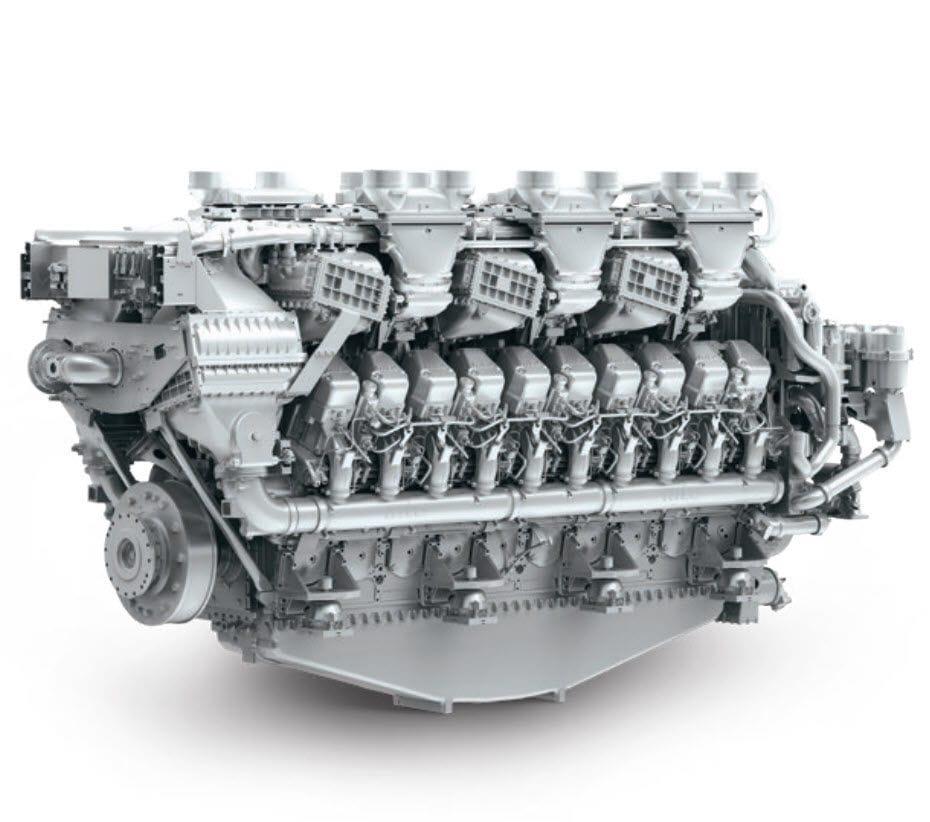
E-FUEL ENGINE TECHNOLOGY
The new era of E-Fuel engines
// FROM SYNTHETIC FUEL TO USABLE POWER //
Discover the technologies turning renewable synthetic fuels into reliable power for marine, rail, industry and power generation.

FUEL · ENGINEERING · POWER
Combustion · Fuel Management · Simulation · Testing

FROM E-FUEL TO POWER
Producing renewable fuel is only half the solution.
E-fuels store renewable energy in a form that can be transported and used at scale. Turning them into reliable power requires engine technology engineered around their specific ignition, combustion, fuel-management and emissions characteristics.
E-FUELS
1
Physical state, ignition behaviour and energy density define the starting conditions.
ENGINE TECHNOLOGY
2
Combustion, injection, materials and control systems are adapted to the selected fuel.
USABLE POWER
3
The complete system delivers reliable power for marine, rail, industrial and power-generation applications.
INSIDE THE TECHNOLOGY
Engineered around the fuel
Renewable synthetic fuels behave differently.Their ignition, combustion and material characteristics influence how an engine must be designed, controlled and tested.



APPLICATION SECTORS
APPLICATION SECTORS
04
E-fuel engine technology for operations where electrification alone is not enough.


COMPARE
Compare fuels, engines and energy pathways.
Different technologies solve different problems. Compare e-fuels with batteries, hydrogen and conventional fuels across efficiency, storage, infrastructure, compatibility and lifecycle performance.

Explore every comparison.
Compare fuel pathways across efficiency, compatibility, storage, infrastructure and lifecycle performance.
BALANCED PERSPECTIVE
Technical potential without oversimplification.
E-fuels can offer meaningful advantages in selected applications, but their relevance depends on energy efficiency, infrastructure, fuel availability, engine compatibility and verified lifecycle performance.
E-fuels are not a universal replacement for direct electrification. Their strongest role is likely to be in applications where energy density, storage, transportability or molecular properties provide clear technical value.
Potential
High energy density for selected applications
Fast refuelling
Long-duration storage
Global transportability
Compatibility with selected engine platforms
Pathways based on renewable hydrogen
Limitations
High renewable electricity demand
Conversion losses
Current production costs
Limited commercial availability
Fuel-specific storage and safety requirements
Compatibility varies by pathway
INSIGHTS